

Products
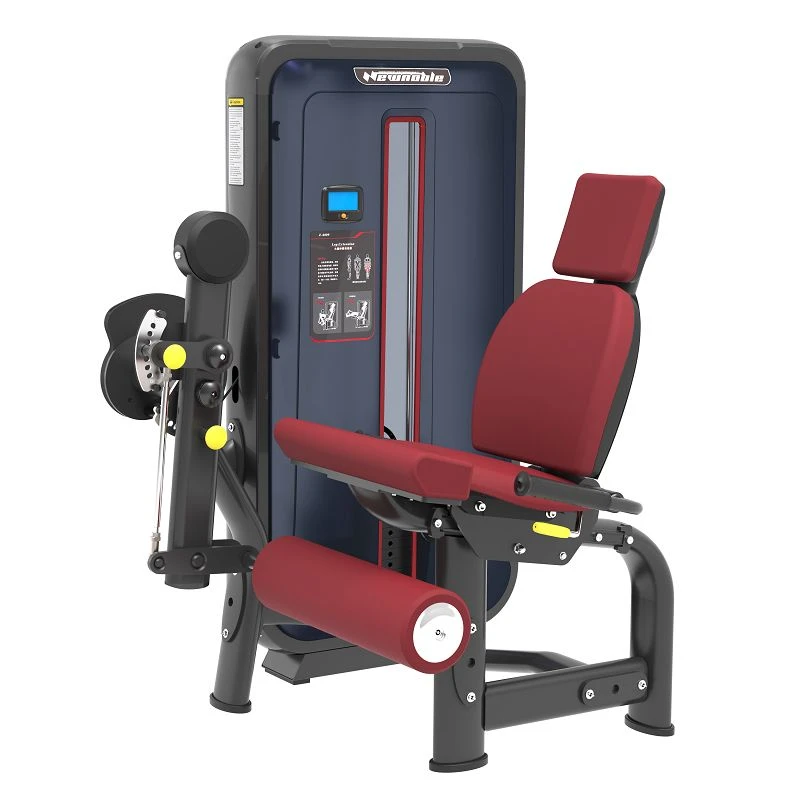
Leg Extension
The New Noble Leg Extension is a commercial selectorized strength machine designed to train the quadriceps through seated knee extension. Its adjustable backrest, cylindrical leg cushion and range-of-motion settings allow users to adapt the exercise position to their training needs.
Features
The New Noble Leg Extension is a commercial selectorized strength machine designed to train the quadriceps through seated knee extension. Its adjustable backrest, cylindrical leg cushion and range-of-motion settings allow users to adapt the exercise position to their training needs.

Technical Specifications
|
Parameter |
Specification |
|
Product Name |
Leg Extension |
|
Dimensions (L × W × H) |
1200 × 1155 × 1477 mm |
|
Floor Area |
1.38 m² |
|
Counterweight |
1 × 99 kg (218 lb) |
|
Net Weight |
112 kg |
|
Main Frame Tube |
120 × 60 × 2.5 mm oval tube |
|
Seat-to-Backrest Angle |
100° |
Product Features
Consistent Pivot Movement
High-precision bearings support smooth rotation during repeated knee extensions, helping maintain consistent movement.
Reduced Operating Impact
Natural rubber buffers cushion contact between rigid components, reducing impact during machine operation.
Protected Frame Surface
Powder coating covers the steel frame with a protective layer, helping resist surface wear in commercial gym use.
Adjustment and User Positioning
Backrest Adjustment: The adjustable backrest helps users establish a suitable seated position before beginning the exercise.
Leg Cushion Adjustment: The cylindrical cushion can be repositioned to accommodate the user's leg position at the working point.
Range-of-Motion Setting: Adjustable movement limits allow the starting and finishing positions to be configured for the intended exercise range.
Frame Construction and Materials
Oval Steel Frame: The main structure uses 120 × 60 × 2.5 mm oval tubing.
Memory Foam Upholstery: Space memory foam is used in the seat and back cushion.
Thermoplastic Components: Thermoplastic is used for the machine's plastic parts.
Finished Tube Ends: ABS plugs seal exposed tube ends, while ground weld seams and rounded edges reduce rough contact points.
Standardized Fasteners: Connecting fasteners are specified to comply with national standards, supporting secure assembly.
Space and Installation Planning
Floor Allocation: The listed floor area is 1.38 m². Allow additional clearance for user access and the leg arm's movement.
Delivery Access: Check doorways, corridors, elevators and the installation route against the overall machine dimensions before shipment.
Strength Training Layout: Position the machine in the lower-body training zone, with sufficient space for users to enter, adjust the seat and complete the exercise.
Customization Process
Confirm Project Requirements
Specify required frame color, upholstery color, logo placement and any other customization needs.
Review Customization Details
Confirm the available options, artwork, specifications and any impact on pricing or production lead time before approval.
Approve the Final Configuration
Review and approve the confirmed product details before production begins.
Production and Quality Inspection
The machine is produced according to the approved configuration, with key components and finished appearance checked before shipment.
Packaging and Delivery
Confirm export packaging, shipping arrangements and delivery schedule according to the order requirements.
Supply Information
Minimum Order Quantity (MOQ): 1 unit for a sample order; bulk order quantities are negotiable.
Production Lead Time: 15–30 days for standard models; 30–45 days for customized orders, depending on order quantity and configuration.
Warranty Reference: 5 years for the frame and 1 year for moving components and upholstery. Confirm the final coverage and exclusions in the sales contract.
Export Packaging: Export wooden crate or pallet packaging, with package dimensions and gross weight confirmed before shipment.
Spare Parts: Replacement cables, bearings, upholstery and other applicable parts can be requested according to the supplied configuration.
After-Sales Service
Warranty Support: Warranty duration and coverage for the frame, moving components and upholstery are confirmed in the sales contract before order placement.
Spare Parts Supply: Replacement cables, bearings, upholstery and other model-specific components can be requested according to the equipment configuration and parts availability.
Technical Assistance: Provide the model details, order reference and fault description when requesting troubleshooting or repair guidance.
Maintenance Guidance: Follow the equipment manual for routine cleaning, inspection of moving components and checks of adjustment mechanisms to help reduce avoidable downtime.
Warranty Claims: Document the issue with photos or videos and submit the purchase records and equipment details for assessment. Repair, replacement and associated costs are subject to the agreed warranty terms.
FAQ
Q: What resistance range should a commercial leg extension machine cover?
A: The required range depends on the facility's user profile. Compare the starting resistance, weight increments and maximum selectable load to determine whether one model can serve both general members and experienced strength trainees.
Q: Why compare the machine's effective resistance rather than weight stack capacity alone?
A: The pulley ratio and cable routing affect how much resistance reaches the user. Comparing effective resistance gives buyers a more meaningful basis for evaluating different machines than comparing stack weight alone.
Q: What can cause a leg extension machine to feel uneven during use?
A: Uneven movement can result from worn bearings, cable friction, pulley alignment issues or mechanical interference. Buyers evaluating a sample unit should check the full movement path under load, not just test the mechanism without resistance.
Q: What should a distributor check before adding a leg extension to its standard equipment range?
A: Assess demand for selectorized lower-body equipment, the target market's expected resistance range, competing models' specifications and the availability of replacement components. These factors affect product positioning and long-term service costs.
Q: What should be checked during a pre-shipment acceptance inspection?
A: Check the machine against the approved specification, inspect welds and surface finish, test the resistance selector and adjustment mechanisms, and cycle the leg arm through its full range under load. Record any defects before accepting the shipment.
You Might Also Like


Send Inquiry
